In Horoma's Head 13
Hi everyone,
Here we go again for a new year and (hopefully) 12 installment of this newsletter that keeps on growing slowly but surely, and that also starts taking a slightly different shape (in my head at least).
First and foremost happy new year to everyone, I hope this first month went well and that if you're the kind of person that takes "new year resolutions", well, that you sticked to them for that first month at least 👌 And if you didn't take any resolution, well all the better!
Anyway, let's get started with some fresh themes for this first month of the year
🐏🐏🐏
The world of Youtube 🎵🔈🧠
As you probably noticed, I haven't uploaded anything on Youtube this month, and probably won't for the coming months either. Several reasons for that :
- Quite a bit of work on the commission side
- I want to dedicate all my free time to finishing the new version of Composition From The Ground Up. This project is taking more time than anticipated, but I'm still making good progress on it so that's good.
Still I've been tinkering with some ideas of new content and new types of delivery (namely daily live videos) that I intend to experiment with once I'm all done with the course (which should be in April I guess). It definitely does feel a bit frustrating to leave the channel behind for so long since it was starting to get a little bit of traction, but I see no point in posting crappy half-assed videos just to keep some activity on there. So better to wait and come back with great content and ideas!
So, sorry, not sorry, hang in there, what's coming up will be pretty cool :)
Last year I posted this video that is still relevant today as clarifying your goals with proper questioning is key in any industry.
The World of Archviz 🎨🎭🖼
I tend to (over)think a lot about the practice of archviz lately. Trying to map out what it really is about, what is complicated about it, what's at its core, etc. Many answers to that of course, but there's one "skill" that came up to my mind while working on some commissions recently, that is : the ability to get up to speed on, sometimes, very complex project.
Recently I was commissioned to do images for an airport development where I basically had months of research done by the architecture team thrown at me in about an hour of meeting. Of course information is diluted so that you only get what is important, but it still is true that for some projects your skills of synthesis and ability to translate concepts into imagery are put to the test.
This of course is something you master over time, and also, to link back to a video I made recently (and didn't even mention the point I'm making now actually), going to architecture school can give you better tools to actually more quickly understand core architectural concepts.
The world of Business and Transparency 🕶👔
For those of you who don't know Sahil Lavingia, he is the founder of Gumroad, a digital platform that lets you sell digital (and physical) goods worldwide very easily. I've been using it to sell my scripts, courses etc. They also got a complete new rebranding recently that looks pretty cool.
One thing worth noting about Gumroad is that they've always been very open and transparent about their strategy and business development. A little bit like Buffer actually.
I think following these guys has actually given me some incentives on being always more open and transparent on my practice as I know it is something usually very under discussed in the industry which makes people starting out feeling like they are navigating in the dark.
Last year they did a fundraising on Republic directly from their users which was very successful and they will probably do another round this year.
Anyway, in this video Savil talks a bit about the adjustment of Gumroad development strategy, the fundraising and other aspect of the managing of this great product.
The world of series 📚📕📖
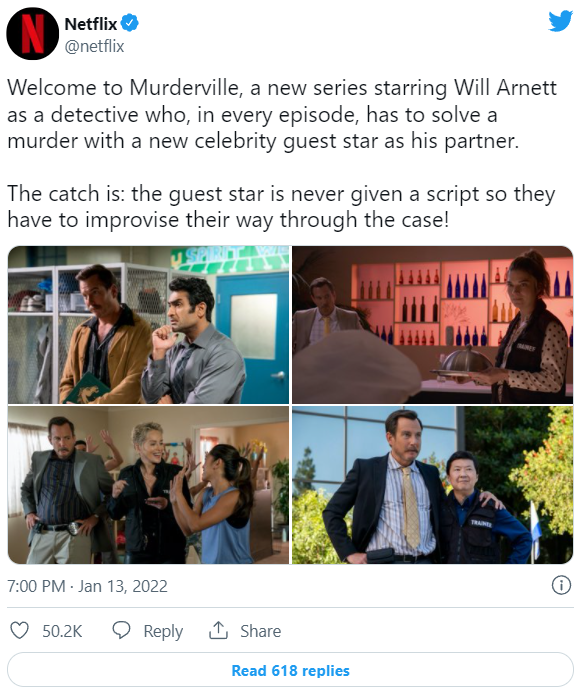
Came across this little tweet that puts a huge smile on my face.
Seems like Will Arnett (that I discovered through Arrested Development) will be starring in a show that conceptually sounds very fun : "the guest star is never given a script so they have to improvise their way through the case".
Can't wait to see this drop on Netflix.
In the meantime I have some catchup to do on Ozarks (that is actually directed by Jason Bateman, who is in Arrested Development). This series has great photography... meaning I spend my time taking screencapture and feeding my reference folder for work.
The world of short architecture movies 🖌🎨🖌
I already mentioned these videographers - 9sekunden - in a previous newsletter. They recently released a new video for the latest building of David Chipperfields, the kunsthaus in Zurich.
While I'm not sure we can translate everything into archviz animation because the video is 9 minute long and .. well... rendering a 9 minute animation would be a lot of work (and money for the client).
Still there are many things that I notice here that work, and that I almost never see in typical archviz videos :
- extended static shot where you can embrace what happens in the scene rather than having the camera moving all the time
- no music and emphasis on environment sounds
- no "program", in the sense that the museum is mostly empty right now (rather it's a sensory installation that is quite minimal in terms of objects). Therefore there's an emphasis on the building rather than its program, which is a nice twist in my opinion.
The world of Prioritizing 🥋🎭👨💼
Earlier this year a friend of mine came to me with a proposal for a very fun project kind of surfing the wave of the metaverse and new NFT projects etc. Can't go into much more details but the idea was appealing and involved desiging cute small axos of landmarks of different cities. Problem is, I was already booked for quite a bit of work and basically didn't have time for any additional work.
And it was fun to see how for a couple of days I was mentally tired because I was still trying to figure out a way to organize my schedule and accomodate for that extra project.
Interestingly enough one of the few "resolution" I had for this year was to not take on too many projects and go easy. So it seemed like early on this year I would fail at that small goal.
In the end I had to let go of this potentially cool project. Saying no to cool contracts is annoying but it really is important to define some limits on the amount of work you're willing to put in for a given time. This year I've decided to stick to a maximum of 4 contracts per month. After reviewing last year I saw that the periods when I was the most tired and feeling less motivated coincided with the periods where I took on 5, 6 or 7 contracts per month and basically had zero free time. While I don't regret having done it in the sense that those were great projects and turned out great, it still took a huge toll on me that I'm not willing to repeat this year.
The world of simple productivity techniques 🥋🎭👨💼
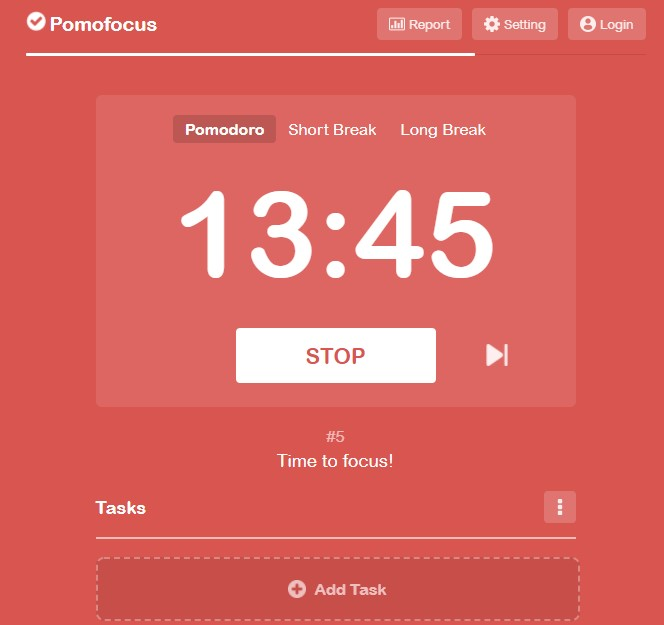
Time perception tends to go a bit haywire when you're working sometimes. This year I've started reusing a technique I remember using many years ago called the Pomodoro Technique (this app). Nothing fancy behind this technique, it's just a basic timer that tells you when to focus, and when to take a break.
While the original technique is alternating 30 minute sprint and 5 minute breaks, I personally set the focus time to 50 minutes and the break to 10 minutes since 30 minutes feels like it's too short to get much done when you're doing 3d work usually.
The main tweak that I've also implemented on top of this little technique is to make sure I either put my phone away, or at least turn off all notifications so that I don't even see any notification on the screen. The new "work mode" on the latest iOS update is actually very handy since my phone automatically switches off all notification during my "work hours".
And the results were unexpectedly good!
When I started planning, my first week of the year was supposed to be dedicated entirely to my course, I was planning of taking a whole day for each of the sections I was supposed to finish up writing. This approximation looked ok based on my experience of how long it seemed to have taken to put together the previous sections.
Interestingly when I starting applying this technique of deep focus, no distractions (I had a specific desktop for the work period), I basically managed to work way more productively than before. I also felt like I had many more breakthroughs and little ideas to add than what I usally had when I was half multitasking.
This little experiment (that I basically have implemented in my day to day practice now) also shed a complete new light on what is possible to do in 50 minutes. 50 minutes is actually a huge amount of time. And the main reason why sometimes at the end of the day we feel like we haven't done much is either because we've lost track of how much we've done, or because we've actually been focusing for only 10% of the day.
So if you have a big project to work on that requires high productivity, try this little tips
- Set a timer for 50 minutes
- Make sure your desk (digital and physical) is clutter free
- Turn off all notification
- if you work in your browser make sure to have no tabs open for stuff unrelated to what you're doing
- Make sure to never skip the breaks. They are required to have a new vision of what you've been working on and help you keep your focus for the following hour. Stand up, walk around. I personally still stay away from social media during the small breaks and prefer to just walk around, so some pushups/situps/pullups, drink a lot of water, and sometimes jot down some random toughts that would cross my mind.
Hope this helps!
That's all for this first newsletter, hope you'll find some useful stuff in there.
If you find this utterly boring and useless, please let me know before unsubscribing 🎀. If on the other hand you do like it, then I'm glad, and feel free to share it with your archviz pals that would maybe like it too by sending them here : https://www.horoma.net/newsletter-subscription
Thank you
All the best for the upcoming month!
Cheers
Simon